Food on a Masai Mara safari is rarely what first-time visitors expect. The assumption is functional camp meals — fuel for game drives. The reality, at any mid-range to quality property, is something else entirely: bush breakfasts set on river banks, three-course dinners under the open sky, Kenyan coffee brewed on a portable gas flame while a blue heron calls from the water.
This guide covers the full picture: what safari camp dining actually looks like day to day, what the iconic bush experiences involve, and what you can eat beyond the camp perimeter if you want to go deeper into Kenyan food culture.
Safari Camp Dining: The Daily Structure
The foundation of your Masai Mara food experience is the camp dining programme. Standards have improved significantly over the past decade: the mid-range to luxury segment now delivers genuinely good food, prepared by resident camp chefs using fresh produce sourced from markets in Narok, Bomet, and nearby community gardens.
A typical day of Masai Mara safari dining:
Early morning (05:30-06:00): A light pre-drive offering before the game drive departs. Hot tea, Kenyan coffee, a biscuit or piece of fruit. Enough to get you moving without weighing you down before the more substantial bush breakfast that follows.
Bush breakfast (after morning drive, 09:00-10:00): The meal most Mara visitors describe first when they come home. Eggs cooked to order, toast, fresh fruit, yoghurt, cereal, and freshly brewed Kenyan coffee or chai. Some luxury camps upgrade this to a full champagne bush breakfast — prosecco, smoked salmon, pastries — served at a riverside table with the full spread of the Mara visible.
Lunch (12:30-14:00): The most social meal of the safari day. Typically a light buffet or set menu: salads, soups, a protein main (chicken, fish, game meat at specialist camps), and a selection of sides. Vegetarian, vegan, and gluten-free options are standard at quality Masai Mara camps with advance notice.
Dinner (19:30-21:00): The most atmospheric meal of the day. At most camps this is a three-course set menu served in the dining room. At the best camps, dinner moves outside: a bush dinner set under the stars. More on that below.
The Bush Breakfast: What It Actually Looks Like
If you only read one section of this guide, read this one.
A bush breakfast in the Masai Mara is less a meal and more a ceremony. After a three to four-hour morning game drive, your guide stops the vehicle at a chosen point: a riverbank, a kopje, an open pan with the sweep of the plains in full view. The camp’s field team has driven ahead and set up a table with a cloth, china cups, a gas burner, and everything needed for a proper breakfast.
You step out of the vehicle. The morning sun is still low and golden. Your camp chef grills eggs on a portable flame while someone pours coffee. There is no noise except the bush: a bird call, wind through the grass, the distant sound of something moving near the river.
This is the experience that Masai Mara first-timers tend to describe most vividly when they return home. It is not about the food itself. It is about where you are when you eat it.
Bush Dinner in the Masai Mara: Dining Under the Stars
Bush dinners are Masai Mara food at its most theatrical. The camp team selects a spot away from the main dining area: an open area with a firepit, lantern-lit tables, and the dark Mara sky overhead. No tent walls, no electric light. Just stars, fire, and the sounds of the night bush.
Bush dinner menus typically feature:
- A fire-grilled meat main: lamb, beef, or game meat at specialist properties
- Traditional Kenyan accompaniments: ugali (maize meal), sukuma wiki (braised kale), kachumbari (tomato and onion salsa)
- Freshly baked camp bread or chapati
- Roasted vegetables and salads
- A dessert: often fruit-based or chocolate mousse at higher-end camps
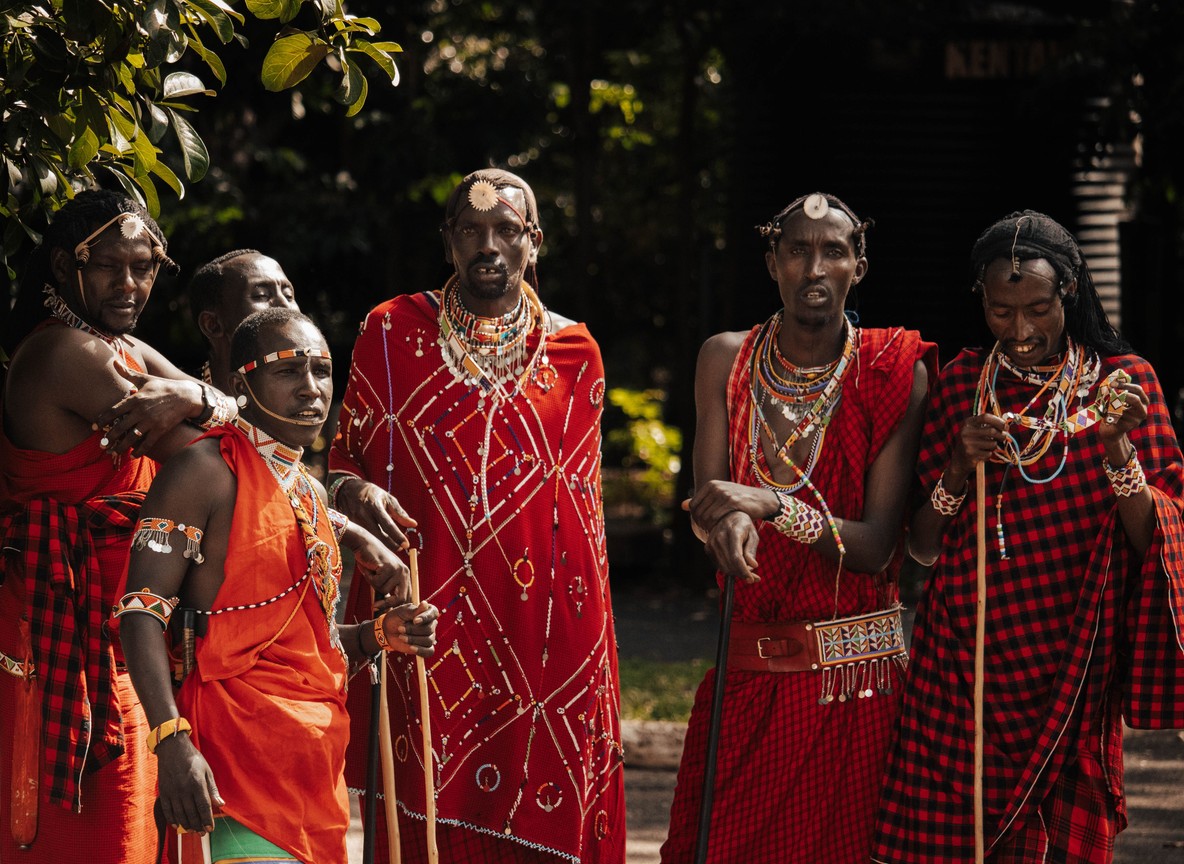
Some camps add Maasai cultural performance to bush dinners — traditional song and dance around the fire, with elders joining the meal. When done well, this is one of the most genuine ways a food experience can become a cultural bridge rather than a performance.
Safari Picnic Lunches: Food for Full-Day Drives
Long game drives into the national reserve include a picnic lunch in the bush. This is Masai Mara safari food in its most portable form, and the answer to what you eat when you are hours from camp.
Picnic lunches typically include:
- Sandwiches or wraps with fresh fillings
- Whole fruit, energy bars, and nuts
- A flask of cold water, juice, or lemonade
- A hot flask of Kenyan chai or coffee
- Sometimes a small dessert item
Picnic quality varies significantly. Budget camps may pack a minimal boxed lunch. Quality mid-range and luxury operations package proper picnic lunches that sustain a full-day drive without leaving you hungry by 4pm. It is worth checking this specifically if you are planning long game drive days.
Maasai Food: What the Community Eats
Most safari food guides skip this section. That is a gap worth closing.
Traditional Maasai food is rooted in pastoralism and is distinct from the food served in safari camp dining rooms.
Traditional Maasai staples:
- Milk: Fresh, fermented (similar to yoghurt), and in ceremonial contexts mixed with cattle blood. Fermented milk stored in gourds is a daily staple.
- Meat: Primarily goat and beef, typically consumed during special ceremonies rather than as daily food. Boiled or roasted.
- Ugali: Maize meal porridge, adopted from Bantu Kenyan food traditions and now a community staple alongside traditional foods.
- Maasai chai: Strong black tea with milk, sugar, and often ginger. Spiced and sweet, brewed strong.
If you visit a Maasai community during your Mara safari and share a cup of Maasai chai, that experience — sitting in a manyatta homestead, watching the community go about its morning — is something no camp dining room can replicate.
Local Kenyan Cuisine Beyond the Camp
Outside the Masai Mara National Reserve boundary, in the towns of Narok, Sekenani, and along the main approach roads, local Kenyan food offers a different dimension of the safari food experience. The roadside stops on the drive in and out of the Mara are worth paying attention to.
Local Kenyan cuisine staples:
- Nyama choma: Kenya’s national meat dish. Slow-roasted goat or beef, served with ugali and kachumbari. The food of every local celebration and most roadside stops.
- Ugali and sukuma wiki: Maize meal with braised kale in tomato and onion sauce. Simple, filling, and deeply Kenyan.
- Mandazi: Deep-fried dough similar to a doughnut. A breakfast staple at local tea houses.
- Githeri: Boiled maize and beans, seasoned and substantial. A home-cooking classic.
- Chapati: Kenyan flatbread, softer and richer than the Indian original. Served with soups, stews, or on its own.
A nyama choma lunch at a local Narok spot — sitting with ordinary Kenyans, ordering at the counter, watching the cook weigh your portion on a battered scale — is a cultural food experience that no camp buffet duplicates.
Sundowners: The Late Afternoon Ritual
A sundowner is not a meal. It is a ritual, and in the Masai Mara it has a very specific form.
As the late afternoon game drive winds down, your guide finds a scenic vantage point: a riverside spot, an escarpment edge, an open pan facing west. The camp team sets up a folding table, a cooler, and glasses. You watch the Mara sunset with a cold Tusker beer, a gin and tonic, or a non-alcoholic ginger juice, depending on your preference.
Most quality Masai Mara camps include sundowners as a daily fixture of the game drive schedule. The quality of the location — and the thoughtfulness of the snacks served alongside drinks — varies camp by camp. It is worth asking about this when you compare properties.
Explorer Notes: Practical Food Planning
Dietary requirements: Most quality Masai Mara camps handle vegetarian, vegan, and gluten-free requirements well with advance notice. Strict dietary needs should be confirmed at booking, not on arrival.
Camp food vs picnic quality: There is often a gap between what camps serve in the dining room and what they pack for full-day drives. If you are planning a full-day game drive with a picnic lunch, ask specifically about picnic quality when choosing your camp.
Champagne bush breakfasts: These are typically available as add-ons at luxury camps and standard after hot air balloon flights. If a champagne breakfast is part of what you are picturing, confirm it is offered before booking.
Local food stops: If you are driving to the Mara (rather than flying), the Narok road passes through several towns with genuine local restaurants. A stop at a local nyama choma spot adds cultural texture to the journey and costs a fraction of camp meal prices.
What to Read Next
Food is one dimension of the broader Masai Mara camp experience. If you are still comparing camp categories and price points, the Masai Mara hotels, camps, and lodges comparison covers what each tier actually delivers.
Every trip described here can be tailored: dates, budget, camps, and pace built around you.
Get a Personalised Safari